Make work flow better.

Harvest Point Consulting helps growing businesses fix work that gets stuck between people, processes and systems.

We find where handoffs break down and ownership is unclear, redesign the workflow itself, then improve or connect the systems around it — applying automation or AI only where it genuinely helps.

Does this sound familiar?

You do not need a tidy diagnosis before reaching out. Most of what we hear from SME and operations leaders sounds like one or more of these.

  • Repeated follow-ups just to get an update
  • Workarounds built in spreadsheets because the system does not fit
  • Unclear ownership when something goes wrong
  • The same information entered more than once
  • Approvals that stall for days without explanation
  • Handoffs between people or teams that regularly drop the ball
  • A process that stops when one experienced person is unavailable

If two or three of these are true, one workflow is probably worth a closer look.

The Diagnostic

Workflow and Systems Diagnostic

In two weeks, know why one important workflow keeps getting stuck, what should change first, and whether the answer is process, systems, automation or AI.

What's included

  • One priority workflow, examined in depth
  • Up to five stakeholder interviews or working sessions
  • A current-state workflow and exception map
  • Bottleneck and root-cause findings
  • Analysis of ownership, handoffs and exception paths
  • A review of how current systems support or obstruct the work
  • Prioritised recommendations
  • A practical 30–60 day improvement roadmap
  • A leadership readout
  • An optional implementation proposal

What this isn't

  • Not an organisation-wide transformation review
  • Does not automatically include implementation
  • Does not assume AI is the answer

Duration: two weeks · Terms: fixed-scope engagement, confirmed on a fit call

Which workflow is taking more effort than it should?

Book a 30-minute fit call. We will work out together whether the Workflow and Systems Diagnostic is the right next step.

Book a Diagnostic Fit Call
How Clifford Works

From problem to working improvement

1

Understand

See how the work happens today, including the people, systems, exceptions and decisions involved. This is what the diagnostic covers.

2

Improve

Simplify or redesign what needs to change before adding more technology, and prioritise what should happen next.

3

Implement

As a follow-on engagement, turn the agreed improvement into a process, system change, automation or AI-enabled solution.

4

Embed

Help the team adopt and sustain the new way of working.

Note: We start with the work, not the technology — automation and AI are applied only where they improve the workflow, a decision or a handoff. The diagnostic above covers Understand; Implement and Embed are follow-on engagements, taken on only where they fit.

Evidence

Where this has worked before

Three engagements that show the same underlying pattern: understand the real workflow before recommending a fix.

Regional Consumer Goods Company

Context: Manual planning and purchase-order workflows were creating effort, compliance and audit-trail concerns, spanning budget updates, purchase-order compliance and closure, KPI reporting and data cleanup.

What was getting stuck: These activities depended on manual work and unclear handoffs between the business and its technology delivery partner.

What Clifford did: As engagement lead, led discovery, process analysis, solution scoping and proposal preparation, then aligned the client and technical partner through prioritisation, validation, UAT coordination and go-live preparation.

What changed: The pain points were converted into an executable phased improvement plan; selected automations progressed through validation and handover, bringing more structure to key planning processes.

Evidence available: Proposal and statement-of-work documents, project correspondence, and validation and UAT material, held under confidentiality.

Capability demonstrated: Turning a manual, compliance-sensitive operational problem into a scoped, executable plan and carrying it through to validation.

Singapore Membership-Based Hospitality Organisation

Context: The organisation needed greater clarity around its food-and-beverage workflows, operational pain points and how information moved across systems.

What was getting stuck: These workflows and data touchpoints were fragmented, and the problem was not yet defined clearly enough to brief as a technology requirement.

What Clifford did: As discovery consultant, facilitated structured discussions with stakeholders, examined workflows and integration points, and helped the team turn scattered concerns into clearer operational problem statements.

What changed: Greater visibility of operational blind spots, more structure to the team's thinking, and alignment on the key pain points and practical next steps for process and data-integration decisions.

Evidence available: Discovery notes and engagement material, held under confidentiality review.

Capability demonstrated: Turning an unclear, not-yet-defined problem into a structured view the team could act on. This was discovery and decision-clarity work; implementation was not part of this engagement.

Regional E-Commerce Organisation

Prior professional employment, not a Harvest Point Consulting engagement.

Context: Regional customer and seller operations needed coordination across six Southeast Asian markets, spanning operational, product and technology teams.

What was getting stuck: Customer and seller workflow improvements, including a rule-based customer-service chatbot, needed requirements coordinated across markets and technology teams.

What Clifford did: As part of the internal team, analysed customer and seller workflow problems, coordinated regional requirements and priorities, and connected operational needs with product and development teams, including chatbot requirements across six Southeast Asian markets.

What changed: Supported regional workflow and system improvements across seller and customer-care operations, including customer-contact reduction, seller onboarding and retention, while coordinating chatbot requirements across six Southeast Asian markets.

Evidence available: Internal performance figures exist but are not independently verified for public use, so they are not published here.

Capability demonstrated: Cross-market coordination and translating regional operating needs into system requirements and rollout.
About

Business Systems Architect

Clifford Tan is a Business Systems Architect who helps organisations fix work that gets stuck between people, processes and systems. His experience spans regional operations, workflow redesign, system implementation, automation and capability building across e-commerce, outsourcing, consumer goods, hospitality and professional learning environments.

Also part of the background

Business Process and Systems Work

Experience in business process, systems and automation work within large regional operating environments, including workflow analysis, requirements definition, solution coordination and operational improvement.

Applied AI Training

Delivers practical training in generative AI, prompt engineering and agentic AI for working adults and business teams. The emphasis is on helping people connect new tools with real operating needs, sound judgement and responsible use.

Also experienced in business and systems analysis, technology implementation support, and AI and automation prototyping.

Technology should fit the work and the people doing it, not the other way around.

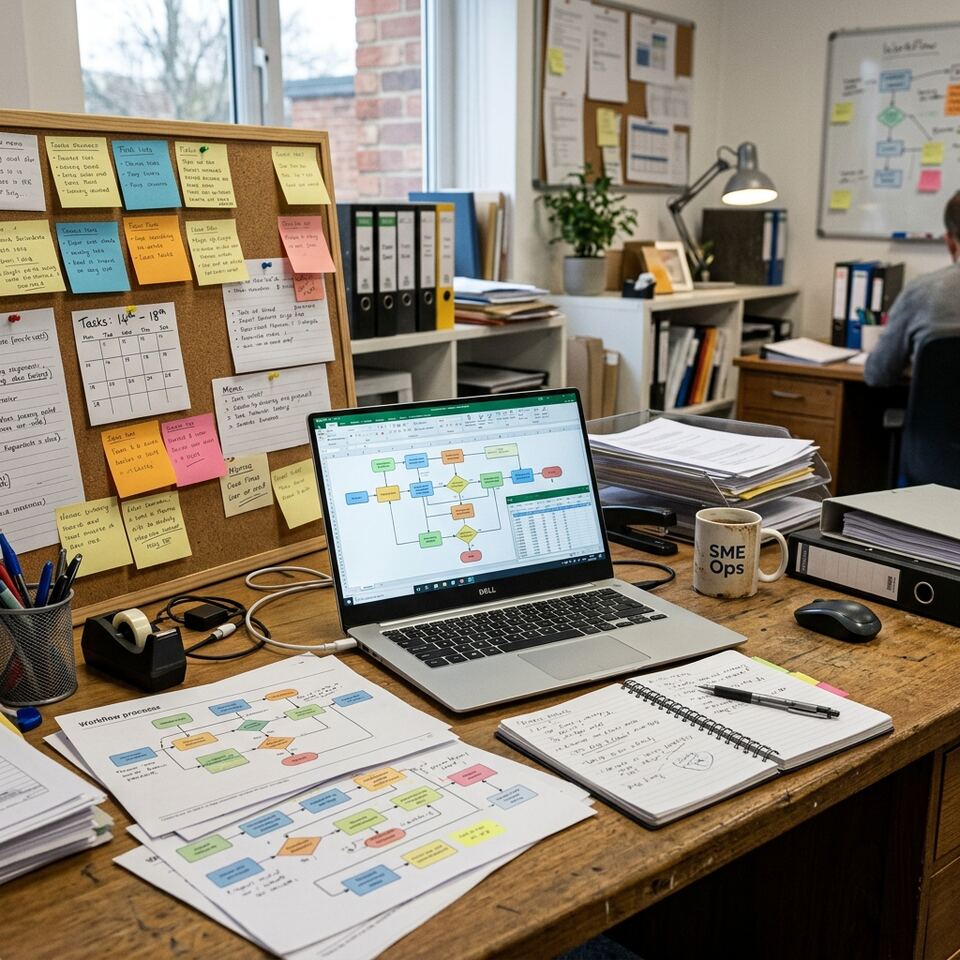
Practical SME operations desk with workflow notes and a laptop

Bring us one stuck workflow.

A recurring operational problem, an unclear handoff, or a system that no longer fits how the work happens — that is enough to start.

Book a Diagnostic Fit Call